Agilis Capitis is latin for Agile Capital. As the name suggests, the investment company has an unconstrained investment strategy. With the current focus being on ASX listed equities, we are able to invest in both long and short positions, taking advantage of both rising and falling markets.
Stock selection methodology focuses on both strategies of:


Technical Analysis
Using algorithm techniques, stocks that are overbought and oversold are identified, while at the same time being confirmed via trend analysis.
Fundamental Analysis
Once a stock has been identified following the Technical Analysis screen, an assessment is made of the fundamental value to confirm the investment opportunity.
Agilis Capitis is an active manager that analyses the the shifting market sentiment to identify trading opportunities.
Fund managers only have the ability to truely analyse and monitor a small number of stocks in great detail. This is why portfolios become overexposed to a small number of stocks. The objective is to:
Using a value approach to investing, whilst applyingtechnical trading concepts and statistical analysis to cover a larger population of stocks, to identify potential investment opportunities.
The investment portfolio remains highly diversified and liquid in order to sell positions quickly and take advantage of new opportunities.
Don't fight the market, but instead use it to your advantage:
Successful investing requires a disciplined approach, detailed research and an independent thought process to deliver sustainable outperformance. An investment manager is limited in the number of opportunities that they can monitor, and not all stocks that are reviewed result in an investment opportunity. Using mathematical and algorithmic analysis to identify opportunities that require further fundamental analysis can quickly identify investment opportunities.
Markets tend to be emotional, short-term and backward looking. Markets continually present opportunities to investors who are unemotional and long-term in their assessment of business potential.
Quantitative techniques are used to reduce the investment opportunities. Quickly identifying opportunities that are experiencing a change in sentiment.
Valuation and qualitative factors are the key drivers of long term share price performance. Both factors are critical and of equal importance to understand what sentiment has changed and if it is justifable.
Agilis Capitis is unconstrained by an index and not led by the erratic sentiments that drive activity in the markets. Instead, opportunities are revealed by a close scrutiny of industry and business cycles, as well as the structural changes and the socio/macroeconomic forces that shape the future of the companies in which we may choose to invest.
The strategy is to build high conviction portfolios of at least 30 stocks. Careful selection provides outperformance while softening the effects of unexpected volatility along the way.

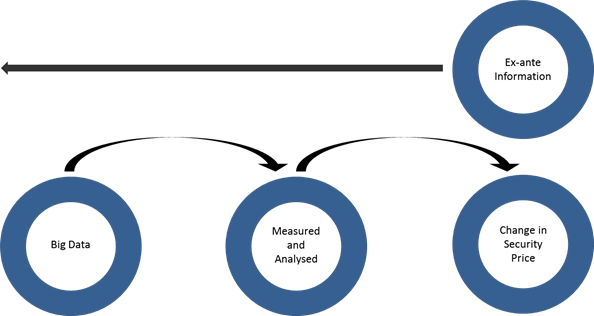
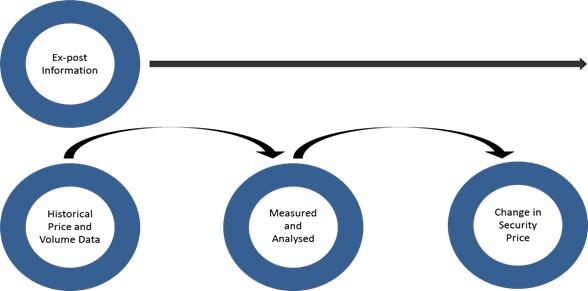
Algorithmic and mathematical trading concepts provide for a quick assessment of the movement in stock prices. It allows for the ability to determine if a stock is overbought or oversold, and if there is a potential to enter a position. Once an investment opportunity is identified, both qualitative and quantitative analysis is undertaken to confirm investment opportunities.
Value lies not simply in the price you pay for an asset, it lies within the potential of what that business can become. It’s by paying less than the intrinsic value of the business that we can create a ‘margin of safety’ for our investors and protect their capital from downdrafts in the market. While also selling those companies that have experienced an increase in their share price that does not justify the intrinsic value.
Short-selling offers us the opportunity to manage portfolio risk by making money in both directions – when the share price of a business is going down as well as going up.
So how do you confirm if a businesses is either under or over valued?
The things considered are:
Irrational extrapolation, the tendency of markets to over-react to change, creates the opportunity that allows us to take investment positions at a great price.

Resilience as the ability to withstand change and sustain a competitive advantage. Considering the business is one aspect of stock identification. The most critical is identifying mispriced opportunities.
The price of a business is the only that is able to be controlled. But that alone is insufficient. An investment case can never depend on one sole factor to deliver a successful outcome as that would risk a single point of failure.
The focus includes:
As well as creating a margin of safety around the stocks selected, risk management at a portfolio level is also critical. This includes utilisation of qualitative and quantitative approaches in measuring and controlling the build-up of similarities in the portfolio so that exposure to shocks and downturns are limited. Maintaining investments at levels that provide for high liquidity without creating price shocks provides for the ability to open and close positions relatively quickly without being trapped, or not being able to crystalise the profits of a trade.
This protective is achieved from diversification, by grouping stocks that behave similarly into clusters. Then ensure that each of these concentrated areas of risk is not over-represented within the portfolio.